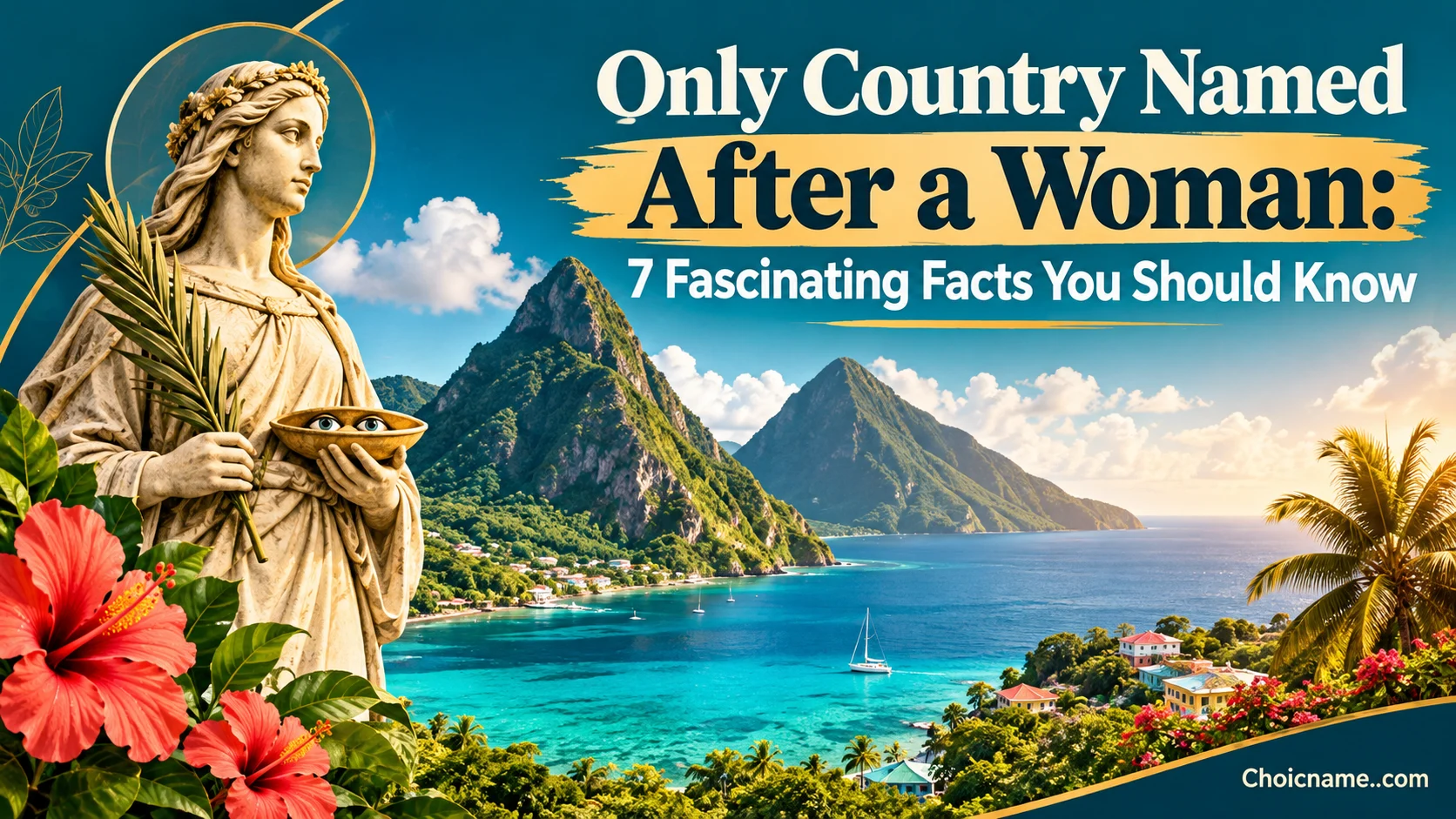
Saint Lucia is widely recognized as the only sovereign country in the world named after a woman. This beautiful Caribbean island nation takes its name from Saint Lucy of Syracuse, a Christian martyr whose feast day is celebrated on December 13. Located in the eastern Caribbean Sea, Saint Lucia is famous for its volcanic Pitons, tropical rainforests, turquoise beaches, and vibrant culture. For travelers, geography enthusiasts, and anyone curious about unusual country names, Saint Lucia offers a fascinating combination of history, natural beauty, and cultural heritage.
Quick Answer: Which Country Is Named After a Woman?
Saint Lucia is the only sovereign country widely recognized as being named after a woman. Its name honors Saint Lucy of Syracuse, an early Christian martyr. Christopher Columbus is traditionally associated with the island’s European discovery in 1502, although the exact circumstances of that encounter are debated. Today, Saint Lucia is an independent Caribbean nation known for its dramatic mountains, beautiful coastline, and distinctive cultural identity.
Why Is Saint Lucia the Only Country Named After a Woman?
Saint Lucia stands out among the world’s sovereign nations because its name is associated with a female historical and religious figure rather than a male ruler, a geographical feature, or a broader ethnic or political identity.
The country’s name honors Saint Lucy of Syracuse, also known as Saint Lucia. She was an early Christian martyr who lived in Syracuse, Sicily, during the late third and early fourth centuries.
Her name is associated with the Latin word lux, meaning light, which contributes to her traditional symbolism as a figure of light and hope.
Saint Lucia’s name is particularly notable because most country names have different origins. Many honor male historical figures, describe geographical characteristics, reflect the names of indigenous peoples, or preserve terminology from colonial periods.
Who Was Saint Lucy of Syracuse?
Saint Lucy was a Christian woman who, according to religious tradition, lived during the persecution of Christians under the Roman Empire. She became a revered Christian saint and is especially associated with Sicily and parts of Europe.
Her feast day, December 13, is celebrated in several Christian traditions. In some European countries, Saint Lucy’s Day is associated with candles, processions, and celebrations of light during the darker part of the year.
Although historical details about her life are limited, her religious significance endured for centuries.
Naming a Caribbean island after Saint Lucy created a lasting connection between the island’s name and a female religious figure.
Is Saint Lucia Really the Only Country Named After a Woman?
Saint Lucia is widely cited as the only sovereign state named after a woman. However, this claim depends on how country names and their origins are classified.
Some countries have names connected to female figures, legendary characters, or feminine forms of words, but their historical naming origins may be disputed or may not directly honor a woman.
Saint Lucia is the clearest commonly accepted example of a sovereign country explicitly named after a woman. The distinction concerns the origin of the country’s name, not the gender of its current leader or the gender of its national symbols.
Where Is Saint Lucia Located?
Saint Lucia is an island country in the eastern Caribbean Sea, part of the Lesser Antilles. It lies between Martinique to the north and Saint Vincent and the Grenadines to the south.
The island is part of the Windward Islands, a group within the Lesser Antilles archipelago.
Saint Lucia is relatively small, but its landscape is remarkably varied. Visitors can experience mountainous volcanic terrain, dense rainforests, coastal villages, fishing communities, and sandy beaches within a comparatively short journey.
Saint Lucia at a Glance
| Fact | Details |
| Official name | Saint Lucia |
| Capital city | Castries |
| Region | Caribbean |
| Continent classification | North America |
| Official language | English |
| Widely spoken local language | Saint Lucian Creole, commonly called Kwéyòl |
| Currency | Eastern Caribbean dollar (XCD) |
| Government | Parliamentary democracy and constitutional monarchy |
| Independence | February 22, 1979 |
| National day | February 22 |
| Famous landmarks | The Pitons, Sulphur Springs, and Pigeon Island |
| Country-name distinction | Widely recognized as the only sovereign country named after a woman |
What Is the Capital of Saint Lucia?
Castries is the capital of Saint Lucia. It is the country’s principal commercial center and an important port for cruise ships, cargo vessels, and other maritime traffic.
The city combines government offices, shopping areas, markets, historic buildings, and access to nearby beaches.
Castries is also a convenient starting point for exploring the rest of the island, including its mountain landscapes, coastal resorts, and cultural attractions.
The History Behind Saint Lucia’s Name
Saint Lucia’s history extends far beyond European exploration. Indigenous peoples inhabited the island before European colonial powers established control over it.
The island’s past includes Indigenous settlement, European competition, slavery, plantation agriculture, and the development of a distinctive Caribbean society.
Indigenous Peoples Before European Arrival
Before European colonization, Indigenous communities lived on Saint Lucia. The island is associated with the Kalinago, while earlier settlement included people connected with Arawakan-speaking cultures.
These communities had their own traditions, social structures, and relationships with the Caribbean environment.
Understanding this earlier history is important because Saint Lucia did not begin with European exploration. Its history includes the experiences and contributions of Indigenous peoples whose presence preceded colonial rule.
European Exploration and the Island’s Name
Christopher Columbus is traditionally associated with the European discovery of Saint Lucia in 1502, but the precise details of his encounter with the island are debated.
The origin of the island’s name is commonly connected with Saint Lucy and her December 13 feast day. However, accounts of early European naming practices are not entirely consistent.
European powers later competed for control of the island, particularly France and Britain. Their rivalry contributed to repeated changes in political authority and influenced Saint Lucia’s language, institutions, and cultural development.
French and British Colonial Rule
Saint Lucia experienced a long period of colonial competition between France and Britain. Control changed hands multiple times before Britain secured lasting dominance in the early nineteenth century.
French influence remained important, especially in language, place names, religion, food, and cultural traditions.
The interaction of African, French, British, and Indigenous influences helped shape modern Saint Lucian identity.
When Did Saint Lucia Become Independent?
Saint Lucia gained independence from the United Kingdom on February 22, 1979.
Today, it is a sovereign country and a member of the Commonwealth. It retains a constitutional monarchy, with the British monarch serving as head of state, represented locally by a governor-general.
Its independence is celebrated annually on National Day, which features cultural performances, public ceremonies, music, and community events.
What Makes Saint Lucia Famous?
Saint Lucia is best known for its spectacular natural scenery, especially its volcanic mountains, rainforest landscapes, and Caribbean beaches.
However, the island offers more than a tropical vacation destination. Its cultural traditions, historical sites, cuisine, and outdoor activities make it appealing to a wide range of visitors.
1. The Pitons: Saint Lucia’s Most Famous Landmark
The Pitons are two dramatic volcanic mountain peaks on Saint Lucia’s southwestern coast.
Gros Piton and Petit Piton rise sharply above the Caribbean Sea, creating one of the island’s most recognizable landscapes.
The Pitons Management Area is a UNESCO World Heritage Site recognized for its geological features and biodiversity.
Visitors can admire the peaks from coastal viewpoints, boat tours, nearby beaches, and selected hiking routes.
Hiking Gros Piton is a popular adventure, but the climb can be strenuous. Travelers should check current trail conditions and use authorized guides where required or recommended.
2. Sulphur Springs and the Drive-In Volcano
Saint Lucia is home to Sulphur Springs, a geothermal attraction near Soufrière often described as the world’s only drive-in volcano.
The area contains volcanic features, steaming vents, and mineral-rich geothermal activity.
Visitors can explore designated viewing areas and, where operating conditions permit, enjoy nearby mineral mud baths.
Despite its name, the attraction is not a conventional open volcanic crater that visitors can freely enter. Access to geothermal areas is controlled for safety.
3. Rainforests and Waterfalls
Saint Lucia’s interior contains tropical forests, mountain trails, and waterfalls.
Nature lovers can explore forest reserves, guided walking routes, and scenic areas where native plants and wildlife thrive.
The island’s humid tropical climate supports rich vegetation, including ferns, flowering plants, and trees adapted to warm, rainy conditions.
Rainforest excursions are particularly appealing to travelers seeking alternatives to beach resorts.
4. Beaches and Coastal Activities
Saint Lucia offers a variety of beaches, from sheltered bays to long stretches of sand.
Popular coastal activities include:
- Swimming and sunbathing.
- Snorkeling and scuba diving.
- Sailing and catamaran excursions.
- Kayaking and paddleboarding.
- Whale- and dolphin-watching tours, when available.
- Sunset cruises along the western coast.
Beach conditions vary by location, so visitors should follow local advice about currents, waves, and swimming safety.
5. Pigeon Island National Landmark
Pigeon Island is a historic and scenic area in northern Saint Lucia.
It features walking trails, coastal views, and remnants of military fortifications associated with the island’s colonial history.
The site offers an opportunity to combine outdoor exploration with an understanding of the strategic importance of the Caribbean during periods of European rivalry.
It is also a popular location for photography and sightseeing.
Saint Lucia’s Culture, Language, and Traditions
Saint Lucia’s identity reflects a blend of African heritage, French cultural influence, British colonial history, and Caribbean traditions.
This mixture is visible in everyday speech, music, food, festivals, religious practices, and community life.
What Language Do People Speak in Saint Lucia?
English is the official language of Saint Lucia. However, Saint Lucian Creole, commonly called Kwéyòl, is widely spoken in everyday conversation.
Kwéyòl developed from French-based Creole traditions and reflects the island’s historical and cultural connections.
Visitors may hear English in hotels, government offices, and formal settings, while Creole is common in informal conversations and cultural gatherings.
Learning a few greetings and expressions can help travelers connect with local communities.
Saint Lucia’s Music and Festivals
Music plays an important role in Saint Lucian culture. Calypso, soca, reggae, and other Caribbean musical styles feature in celebrations and public events.
The island is also known for its annual Saint Lucia Jazz and Arts Festival, which attracts performers and audiences from the Caribbean and beyond. Programming and dates vary from year to year.
Other cultural celebrations highlight local music, dance, food, and community traditions.
These events provide opportunities to experience Saint Lucia beyond its resorts and scenic attractions.
What Food Is Saint Lucia Known For?
Saint Lucian cuisine combines Caribbean ingredients with African, French, and other regional influences.
Popular foods and culinary experiences include:
- Green fig and saltfish, the national dish, traditionally prepared with green bananas and salted cod.
- Callaloo soup, made with leafy greens and other ingredients.
- Accra, a seasoned fritter commonly prepared with fish or vegetables.
- Fresh seafood, including locally prepared fish dishes.
- Tropical fruits such as mangoes, bananas, and papayas.
- Creole-style stews, sauces, and side dishes.
Food traditions vary between households and communities, making local markets and family-run restaurants useful places to discover regional flavors.
Is Saint Lucia a Good Destination for American Travelers?
Saint Lucia is a popular destination for US travelers interested in tropical scenery, outdoor adventures, romantic getaways, and Caribbean culture.
It offers both resort-style relaxation and opportunities to explore villages, rainforests, historic sites, and volcanic landscapes.
Best Time to Visit Saint Lucia
Saint Lucia has a tropical climate, with warm temperatures throughout the year.
The drier season generally runs from December through May, while the wetter season usually extends from June through November.
Many visitors prefer the drier months for beach activities and outdoor excursions. However, this period can also bring higher accommodation prices and greater demand.
Travelers visiting during the wetter season may find different pricing opportunities, but should monitor forecasts and tropical storm advisories.
The Atlantic hurricane season officially runs from June 1 through November 30, making travel insurance and flexible arrangements especially useful during that period.
How Can Americans Get to Saint Lucia?
US travelers can reach Saint Lucia through its two principal airports:
- Hewanorra International Airport (UVF), near Vieux Fort in the south.
- George F. L. Charles Airport (SLU), near Castries in the north.
Hewanorra handles most international jet traffic, while George F. L. Charles primarily serves regional flights.
Flight availability depends on departure city, season, and airline schedules. Some travelers can find nonstop services from selected US cities, while others need a connection through another Caribbean or North American airport.
Visitors should verify current entry requirements, passport validity, and any applicable travel documentation before departure.
Is Saint Lucia Expensive to Visit?
Saint Lucia can suit different travel budgets, but costs vary significantly according to accommodation, transportation, dining, and activities.
Luxury resorts and private excursions can make a trip expensive, while smaller guesthouses, local restaurants, and independently planned outings may offer more affordable options.
| Travel style | Typical experience | Ways to manage costs |
| Budget-conscious | Guesthouses, local meals, selected free attractions | Travel outside peak periods and compare transport options |
| Midrange | Comfortable hotels, restaurant meals, guided excursions | Combine independent sightseeing with a few paid tours |
| Luxury | High-end resorts, private transfers, premium dining | Compare packages and confirm which services are included |
There is no single price that applies to every visitor. Compare current airfare, accommodation rates, transportation charges, and excursion fees before estimating your total trip cost.
Is Saint Lucia Safe for Tourists?
Many travelers visit Saint Lucia without serious problems, but ordinary travel precautions remain important.
Keep valuables secure, use reputable transportation providers, follow swimming and hiking safety guidance, and avoid unfamiliar areas after dark when appropriate.
Visitors should also check current travel advisories and local weather warnings before and during their stay.
For outdoor activities, especially mountain hikes and boat excursions, choose established operators and follow their safety instructions.
Frequently Asked Questions About the Only Country Named After a Woman
1. What is the only country in the world named after a woman?
Saint Lucia is widely recognized as the only sovereign country named after a woman. Its name honors Saint Lucy of Syracuse, an early Christian martyr.
2. Why is Saint Lucia named after Saint Lucy?
The island’s name is traditionally associated with Saint Lucy and her Christian feast day on December 13. The exact details of the island’s early European naming history are not entirely certain.
3. Is Saint Lucia a country or an island?
Saint Lucia is both an island and an independent sovereign country in the Caribbean. It has its own government, national institutions, and international recognition.
4. Where is Saint Lucia located geographically?
Saint Lucia lies in the eastern Caribbean Sea within the Lesser Antilles. It is situated south of Martinique and north of Saint Vincent and the Grenadines.
5. What is the capital of Saint Lucia?
Castries is the capital and principal commercial center of Saint Lucia. It is also an important port and a starting point for exploring the island.
6. What language is spoken in Saint Lucia?
English is the official language, while Saint Lucian Creole, or Kwéyòl, is widely spoken in everyday life. Both languages reflect different aspects of the island’s history.
7. Is Saint Lucia part of the United States?
No. Saint Lucia is an independent Caribbean country and is not a US territory or state. It became independent from the United Kingdom on February 22, 1979.
8. What is Saint Lucia most famous for?
Saint Lucia is particularly famous for the Pitons, its volcanic scenery, Sulphur Springs, tropical rainforests, beaches, and distinctive Caribbean culture. It is also a popular destination for hiking, snorkeling, and romantic holidays.
Final Thoughts
Saint Lucia is a remarkable answer to the question, “What is the only country named after a woman?” Its name connects the modern Caribbean nation with Saint Lucy of Syracuse, giving it a distinction that sets it apart from other sovereign countries.
Yet Saint Lucia is much more than an unusual name. Its independent history, vibrant Creole culture, volcanic landscapes, beautiful beaches, and rich culinary traditions make it an important part of the Caribbean’s cultural and geographical story.
Whether you are researching world geography, learning about country-name origins, or planning a Caribbean vacation, Saint Lucia offers a fascinating example of how history, religion, and national identity can come together in a single name.